


Could Central and Eastern Europe Become Football’s Next Pre-Season Market?
- Roger Hampel

- 4 minutes ago
- 5 min read
Roger Hampel

Image: SuperMecz
When Manchester United and AC Milan walked out in front of more than 43,000 supporters in Wroclaw, Poland this summer, one question kept coming back to me:
Is Central and Eastern Europe still an underused pre-season market for Europe’s biggest football clubs?
I was at the match, and the wider event looked increasingly like the type of international pre-season product we associate with destinations much further away from Europe's major football markets.
There was a modern stadium. Tickets started at around €93. Supporters could attend city-centre activations featuring legends from both clubs. Global club partners such as DHL were visible alongside event partners, while advertising inventory also promoted Lower Silesia, the host region.
For Manchester United and Milan, it was a pre-season fixture.
For Wroclaw, it felt considerably bigger.
And that difference in significance may be one of the most interesting opportunities for Central and Eastern Europe.

Wroclaw Was Not an Isolated Case Central
Look across the region this summer and there were several other examples worth noting.
In Budapest, Real Madrid faced Ferencváros in front of 20,097 supporters at a sold-out Groupama Arena.
In Cracow, Sevilla travelled to Poland to face Cracovia as part of the Polish club's 120th anniversary celebrations. The same city produced another international fixture when Wrexham AFC faced Wisła Kraków, also connected with a 120th anniversary.
Elsewhere, Beşiktaş spent part of its pre-season in Slovakia and faced Spartak Trnava, while Slovenia continued to attract clubs for training camps and friendly matches, including teams such as Hull City and Charlton Athletic.
These are clearly not identical propositions.
A Real Madrid appearance in Budapest has a different commercial profile from an English club holding a training camp in Slovenia. An anniversary match involving a local institution serves a different purpose from a standalone international event.
But taken together, they show that the region can accommodate several different forms of pre-season football.

Image: Real Madrid
CEE Has a Logistics Advantage
The first advantage is obvious: geography.
For clubs based in England, Germany, Italy, France or other major European leagues, much of Central and Eastern Europe can be reached relatively quickly.
That matters during pre-season.
Long-haul tours to the United States or Asia can provide significant commercial opportunities, but they also involve substantial travel, time-zone changes and logistical demands.
CEE offers a different proposition.
A club can enter another international market without necessarily undertaking an intercontinental tour.
That does not make the region a replacement for the United States or Asia. Those markets operate at a completely different commercial scale and can serve broader strategic objectives.
CEE can complement them.
For some clubs, particularly those looking to balance sporting preparation with international activity, that distinction could be valuable.
The Infrastructure Is Already There
The second advantage is infrastructure.
Cities across the region already have modern football venues capable of staging major international fixtures.
Wroclaw is a good example. The stadium infrastructure exists, transport connections are established and a major European fixture can be combined with activity in the city centre.
Budapest demonstrated another version of the model with a sold-out Groupama Arena.
That reduces one of the barriers to developing international pre-season events. The host market does not necessarily need to build the infrastructure first.
In many cases, it needs to package what is already there.
Established Football Audiences Matter
There is also a tendency to think about international growth primarily in terms of geographically distant markets.
But internationalisation does not always require crossing an ocean. Premier League, LaLiga, Bundesliga and Serie A clubs already have supporters throughout Central and Eastern Europe. European competitions, television distribution, social media and decades of player movement have created familiarity with the biggest clubs.
A pre-season visit can turn that remote relationship into a physical one. For a supporter who normally watches Manchester United, Milan or Real Madrid through a screen, seeing that club locally carries a different value.
That is particularly important in markets where opportunities to attend matches involving Europe's largest teams remain limited.
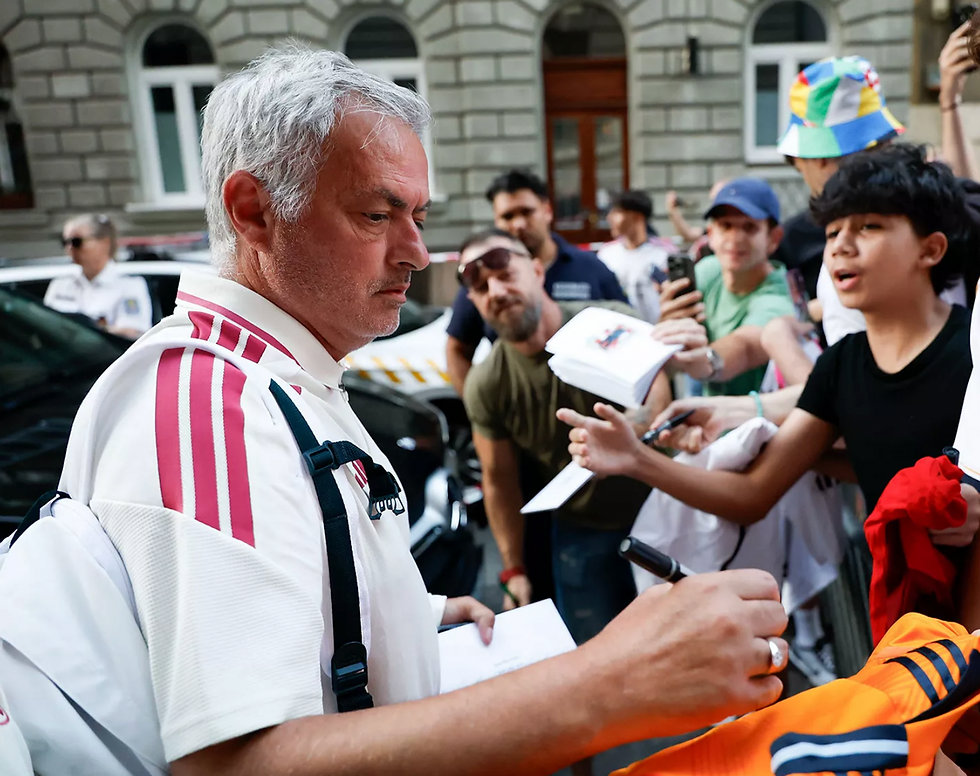
Image: Real Madrid
Scarcity Could Be an Advantage
This is where the argument becomes particularly interesting.
CEE does not currently have the same concentration of major international pre-season fixtures as some established overseas tour markets.
At first glance, that could be seen as a weakness. It may also be part of the opportunity.
When major clubs visit markets where appearances are relatively rare, individual events can carry greater local significance.
The fixture is not competing with a long calendar of similar international matches.
Media attention can be concentrated. Supporter demand can be stronger. Local partners have a more distinctive platform. Cities and regions have an event around which they can build tourism and promotional activity.
Scarcity creates relevance.
The challenge, of course, is turning that relevance into a sustainable commercial model.
The Host City Has Something to Gain Too
The Wroclaw example also highlighted another dimension: destination marketing.
Football pre-season is usually discussed from the club perspective — ticket sales, sponsorship activation, merchandise, supporter acquisition and international brand growth.
But the host has its own objectives.
Advertising around the Manchester United-Milan fixture included promotion of Lower Silesia, placing the region alongside brands benefiting from the international attention surrounding the event.
That creates an interesting alignment.
A club wants access to supporters.
An organiser wants to sell an event.
A city or region wants visitors, visibility and international exposure.
A major pre-season fixture can potentially serve all three.
This may be particularly relevant for CEE destinations competing for international tourism and looking for sports properties capable of generating attention beyond their domestic markets.
Not Every Club Needs an Intercontinental Tour
The opportunity for CEE does not depend on competing directly with established pre-season markets in the United States or Asia.
Those destinations remain important for clubs with major sponsorship interests, established fan bases and long-term growth strategies in those markets.
CEE can offer a different proposition: international fan engagement closer to Europe's major leagues, supported by modern infrastructure, established football audiences and relatively straightforward logistics.
The more interesting question is whether the region can establish a stronger position alongside existing pre-season destinations.
A club may spend one summer in the United States or Asia and another combining a European training camp with one or two international fixtures in Central and Eastern Europe. Others may include the region within a broader pre-season programme.
There is also room for different formats.
Anniversary games can bring major international clubs into historic local football environments. Standalone fixtures can become significant sporting and entertainment events for host cities. Training camps can combine sporting preparation with opportunities for local fan engagement.
CEE does not need to follow one particular model to strengthen its position on the pre-season calendar.
Same 90 Minutes, Different Significance
That is ultimately what stayed with me after the match in Poland.
For Manchester United and AC Milan, the match was one stage in preparation for another season.
For many of the 43,000-plus people inside the stadium, it was a rare opportunity to see two of Europe's most recognisable football clubs in their own region.
For commercial partners, it was another activation platform.
For the host region, it was an opportunity to place Lower Silesia in front of a large football audience.
Those perspectives all converge on the same fixture.
CEE already has many of the ingredients: accessibility, stadium infrastructure, established football audiences and cities interested in using sport as an international platform.
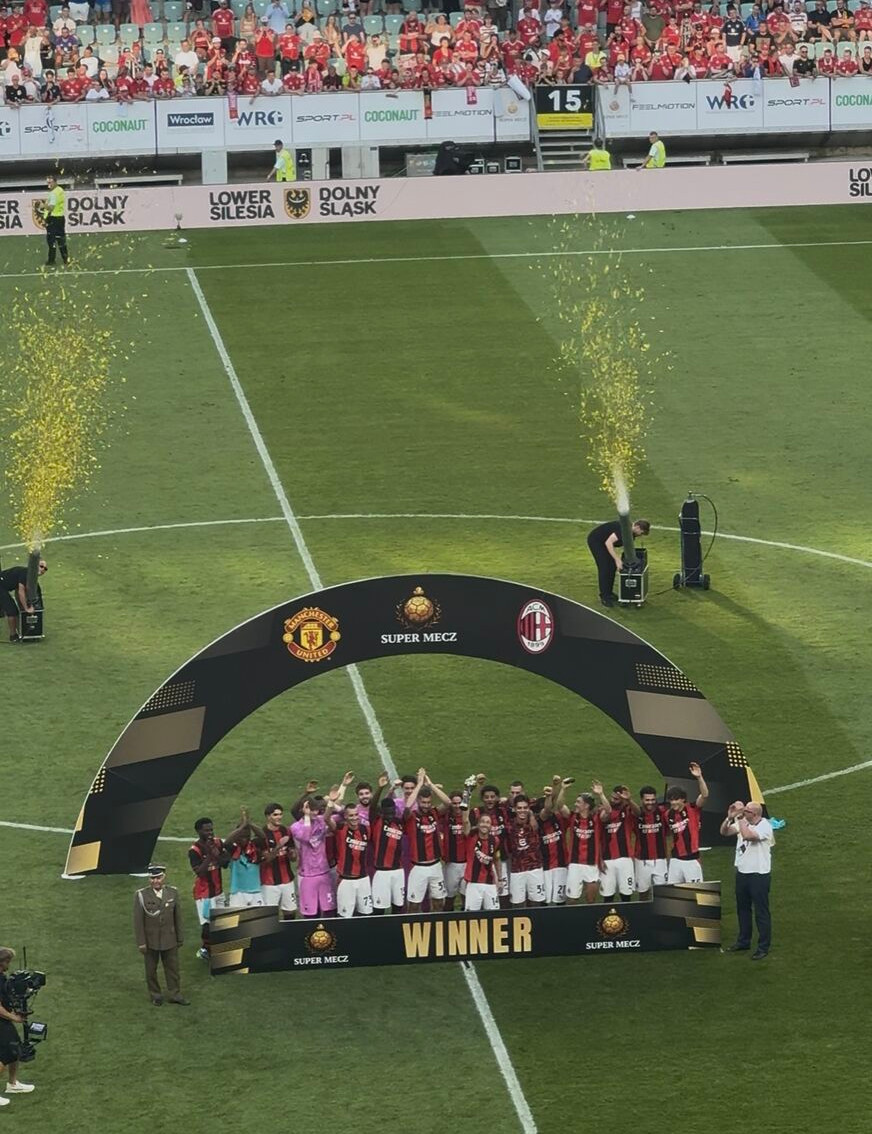
Examples like Wroclaw show what major international pre-season events can look like in Central and Eastern Europe.
And with such fixtures still relatively rare across the region, each one has the potential to carry particular significance for supporters, partners and host destinations.
For a global club, it is a pre-season friendly.
For the host city, it can be the sporting event of the year.
Same 90 minutes. Completely different significance.


Comments