


FIFA Confirms Hydration Break Protocol for World Cup 2026, With Natural Visibility Benefits for Powerade.
- Roger Hampel

- Dec 9, 2025
- 2 min read
Roger Hampel
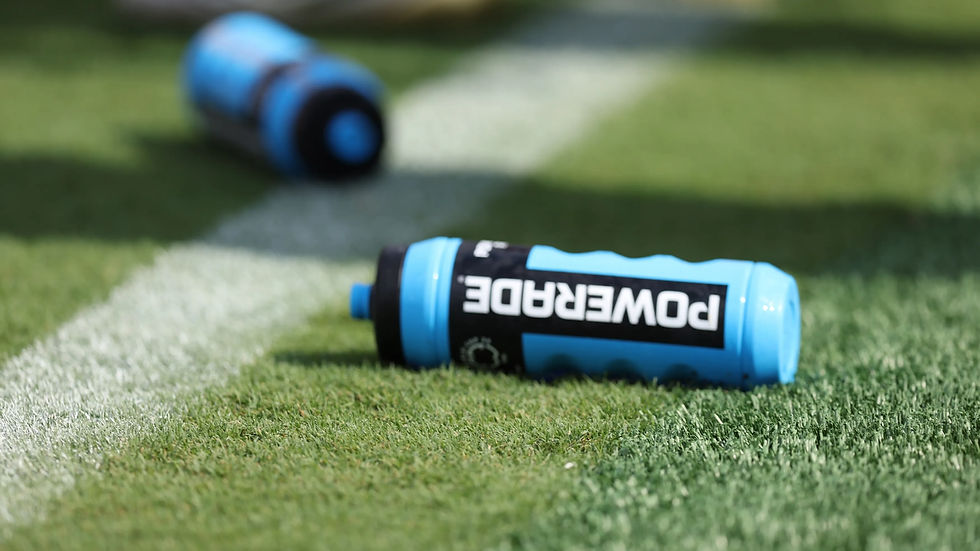
Image: FIFA
A Welfare-Driven Change to Match Operations
FIFA has confirmed that the FIFA World Cup 2026 will include mandatory three-minute hydration breaks midway through each half of every match. The measure, applied regardless of weather conditions or venue, is intended to ensure consistent player-welfare standards across a tournament that spans 16 host cities in Canada, Mexico and the United States.
The breaks will occur at the 22nd minute of each half, creating a uniform match rhythm and giving players a designated moment to rehydrate, independent of temperature or stadium infrastructure.
Operational Lessons Drawn From Club World Cup 2025
The decision builds on experience from the FIFA Club World Cup 2025, held in the United States, where hydration breaks were used frequently due to high temperatures. During that event, Powerade — a Coca-Cola Company brand — held visible presence as part of its global partnership with FIFA, including scoreboard displays activated during these pauses.
While the 2026 decision is framed around welfare and tournament logistics, the earlier tournament showed how structured pauses can also carry communication value for partners already embedded within FIFA’s sponsorship ecosystem.
A Structured Match Moment With Natural Visibility Effects
The introduction of fixed hydration breaks creates a clear, predictable pause in play, something that has not previously existed in senior FIFA competitions in such a standardised form. Each match will now feature two scheduled interruptions across 104 fixtures, which means a total of 208 repeated moments that are likely to be recognised by broadcasters, fans and partners as a distinct part of the match experience.
Because these pauses are announced and managed centrally by the referee and match operations, they naturally synchronise multiple channels: in-stadium screens, on-site announcements and television graphics all pivot around the same point in time. From a sponsorship-analysis perspective, this makes hydration breaks different from traditional static advertising. They behave more like a recurring narrative element within the game, even though their primary purpose remains medical and operational.
In markets such as the United States, Canada and Mexico — where sponsor-presented stoppages are a familiar part of the sports landscape — the format is also likely to be easily understood by local audiences. This cultural fit increases the probability that hydration breaks will be integrated smoothly into match coverage without disrupting the viewing experience.
For long-standing partners such as Coca-Cola and Powerade, this new structure may therefore provide additional opportunities for visibility, especially when their brands are already associated with hydration and sports performance. Any such exposure would arise as a secondary effect of the protocol rather than its stated objective, but it is nonetheless a notable development in how match operations intersect with existing sponsorship frameworks.
Consistency for Broadcasters and Teams
At the World Broadcaster Meeting in Washington, D.C., FIFA officials explained that the universal timing of hydration breaks also supports the wider operational planning for a tournament of unprecedented scale. Broadcasters benefit from a predictable match structure, while teams gain clarity regarding match rhythm and recovery moments.
The 2026 schedule was developed through extensive venue-specific modelling, incorporating climate data, travel demands and cooling capabilities, with hydration breaks forming part of a broader welfare-oriented approach.


Comments